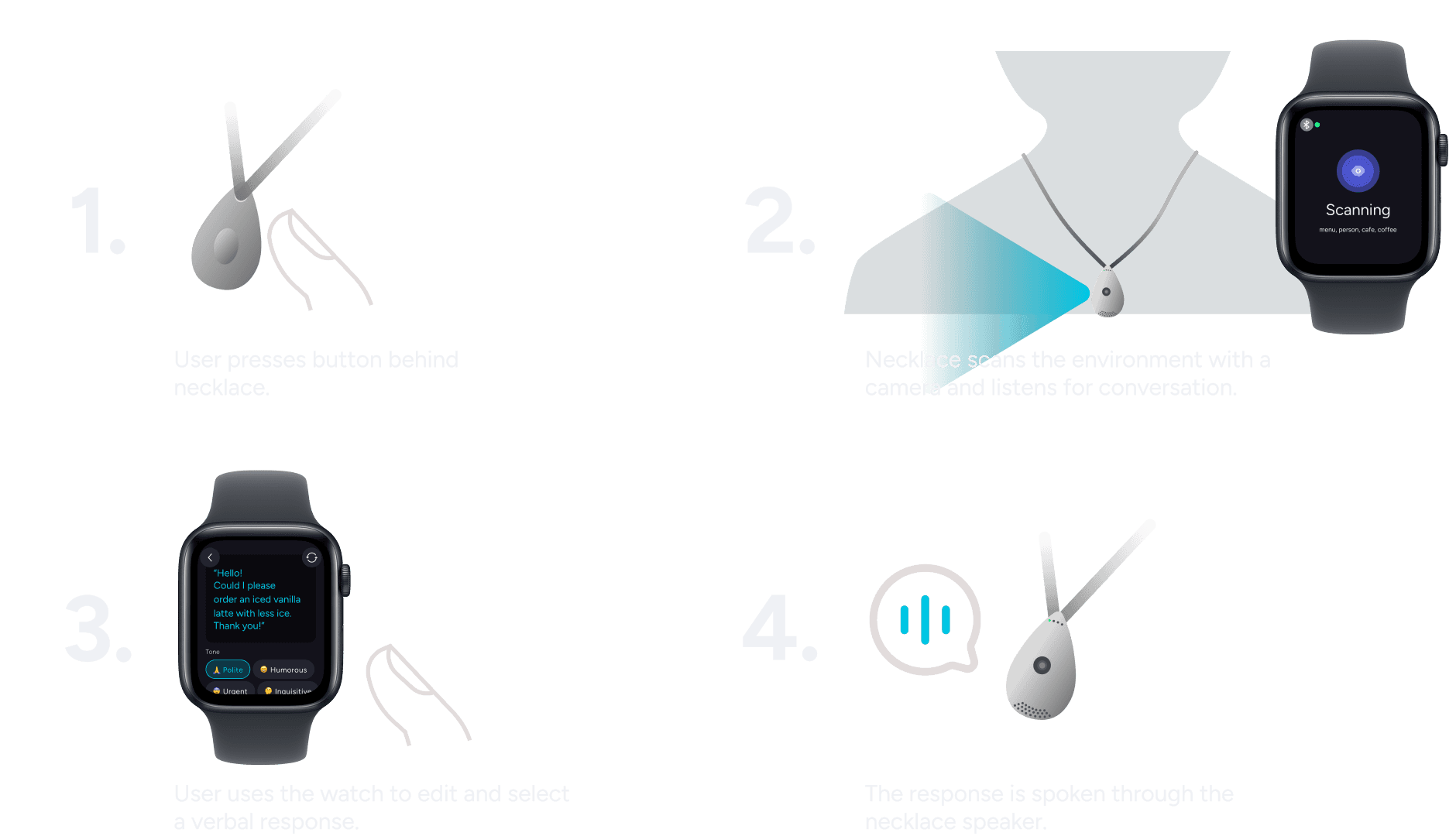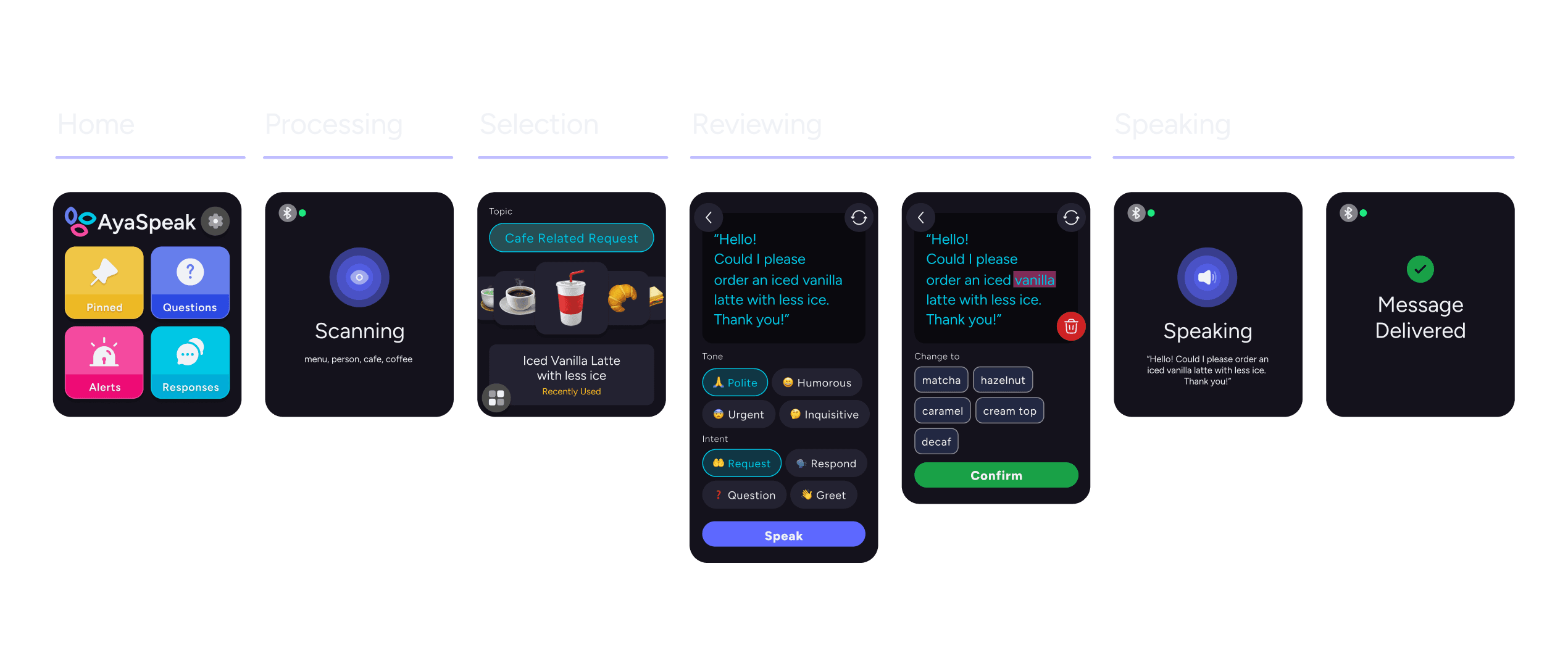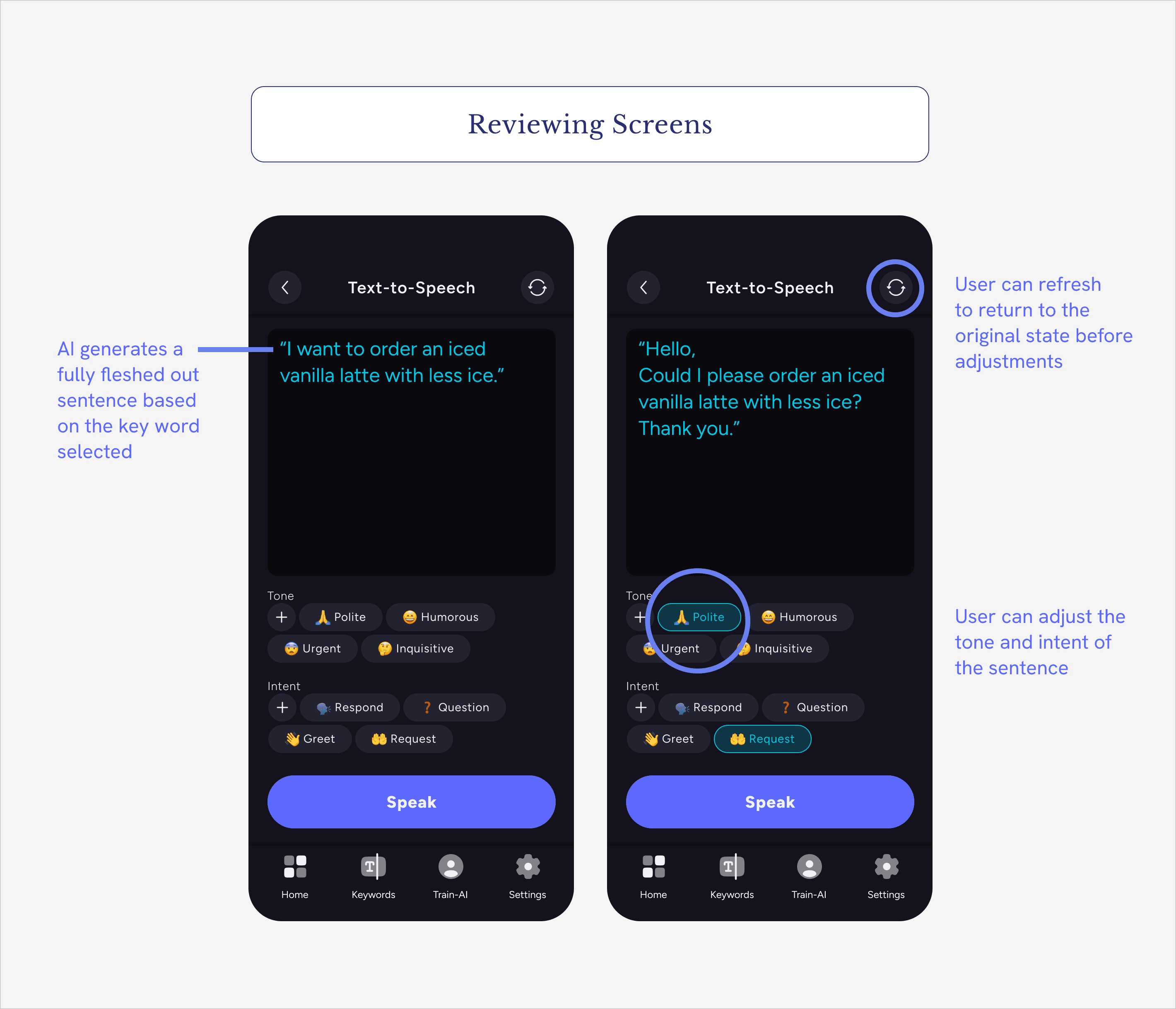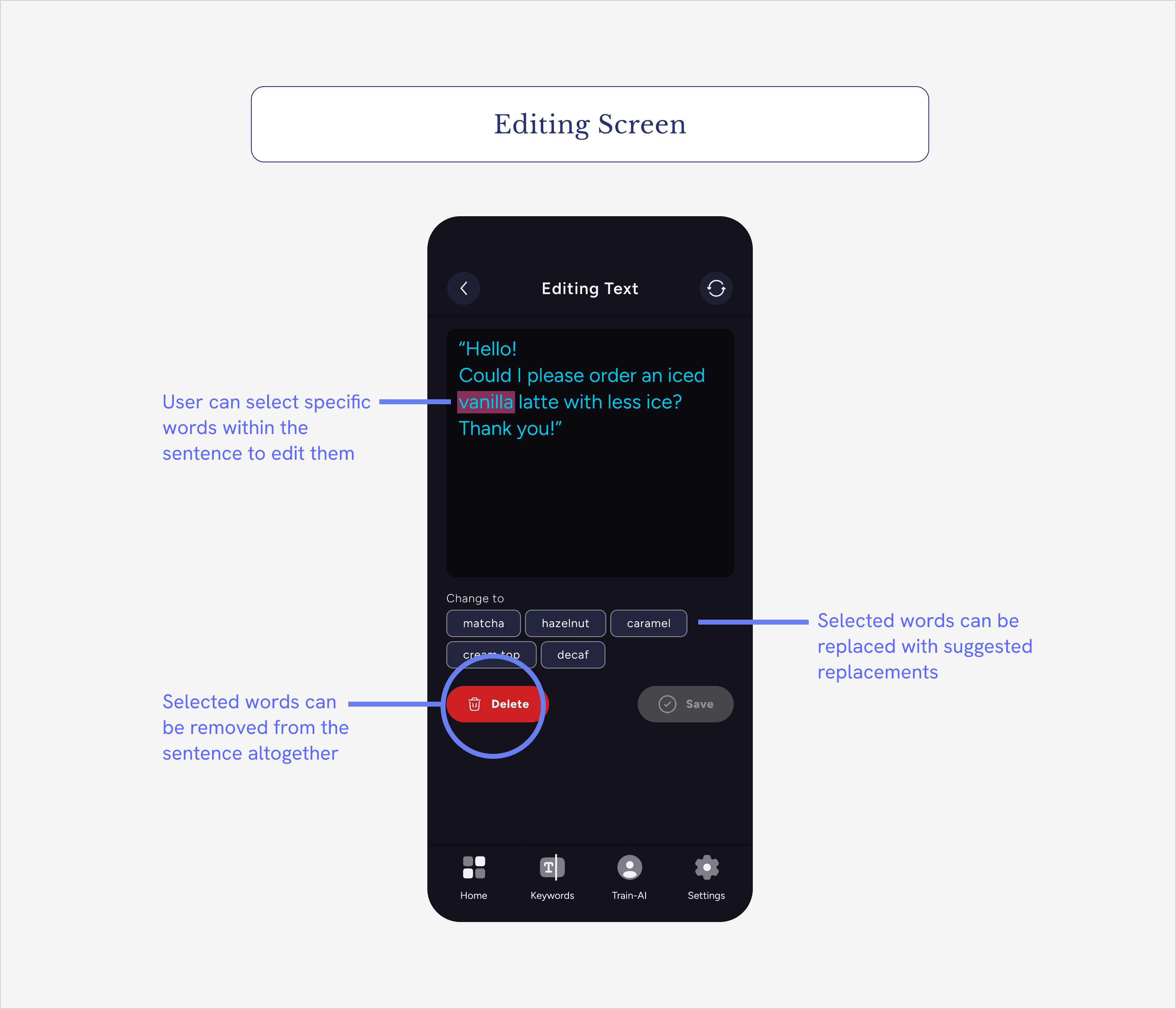
Users with Complex Communication Needs (CCNs) often have disabilities that severely limit their ability to communicate with others using speech alone. To work around their unique difficulties, users with CCNs turn to Augmentative and Assistive Communication (AAC) devices to improve their quality of life in functional and social aspects. In this project, I design an AAC system that borrows the power of AI and wearable technology to allow for more effective and autonomous communication.
Designing a More Effective Augmentative and Assistive Communication System
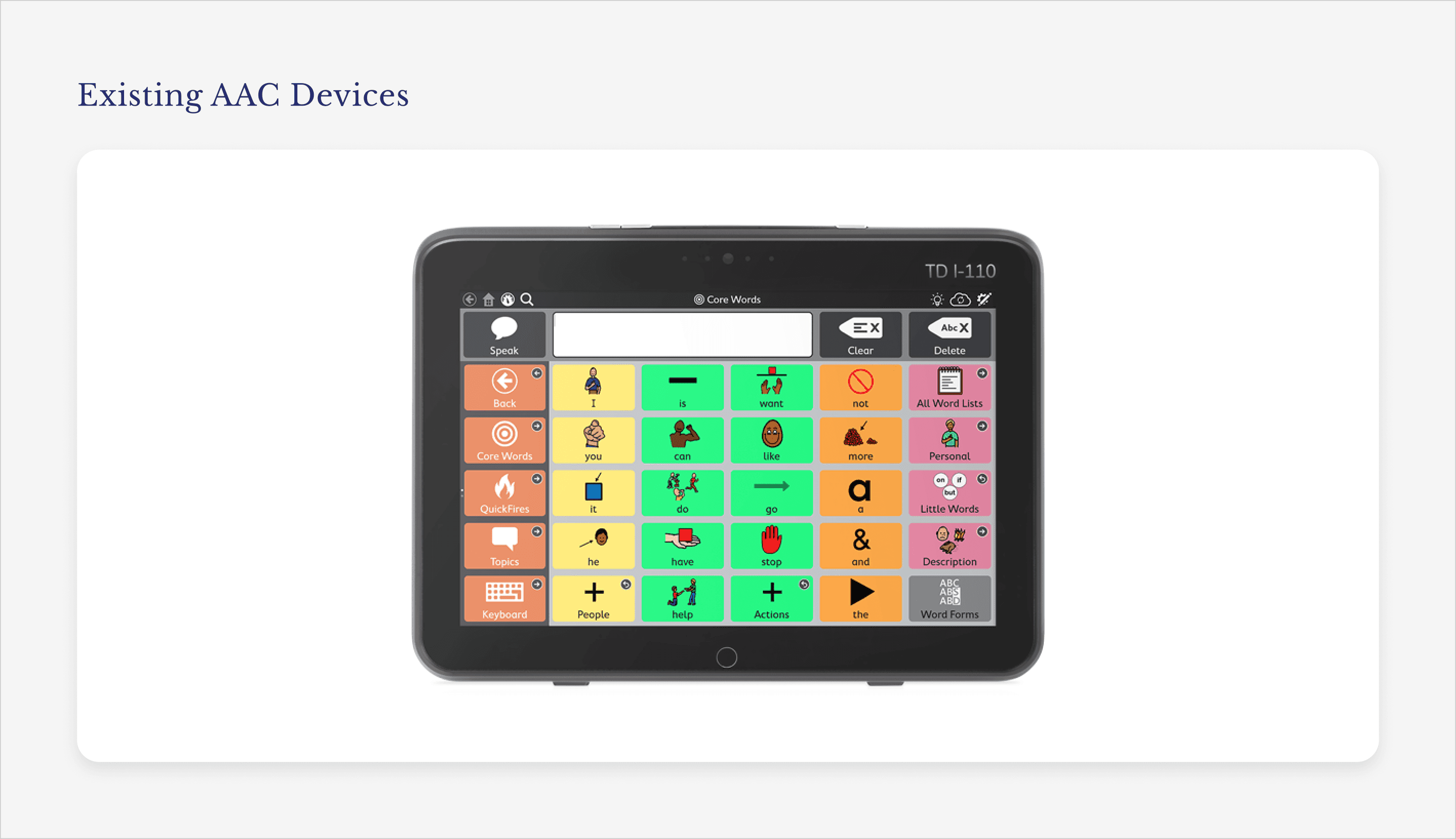
Literature Review on AAC Devices
Stigma from the visibility of a disability is linked to the abandonment of Augmentative and Alternative Communication (AAC) devices.
The device should be invisible until the user wants to make it visible.
AAC devices allow people with Complex Communication Needs (CCNs) to participate in conversations, which in turn builds confidence and autonomy.
Interacting with the device should grow the users’ confidence and independence.
AAC devices can be limiting when they’re made up of a pre-configured set of communicative phrases, but could be more usable if made adaptable to the user and the context of the interaction.
The device should be smart and adaptable, so that the users can communicate more effectively and expressedly.
Problem Statement
Understanding the User
Empathy Map
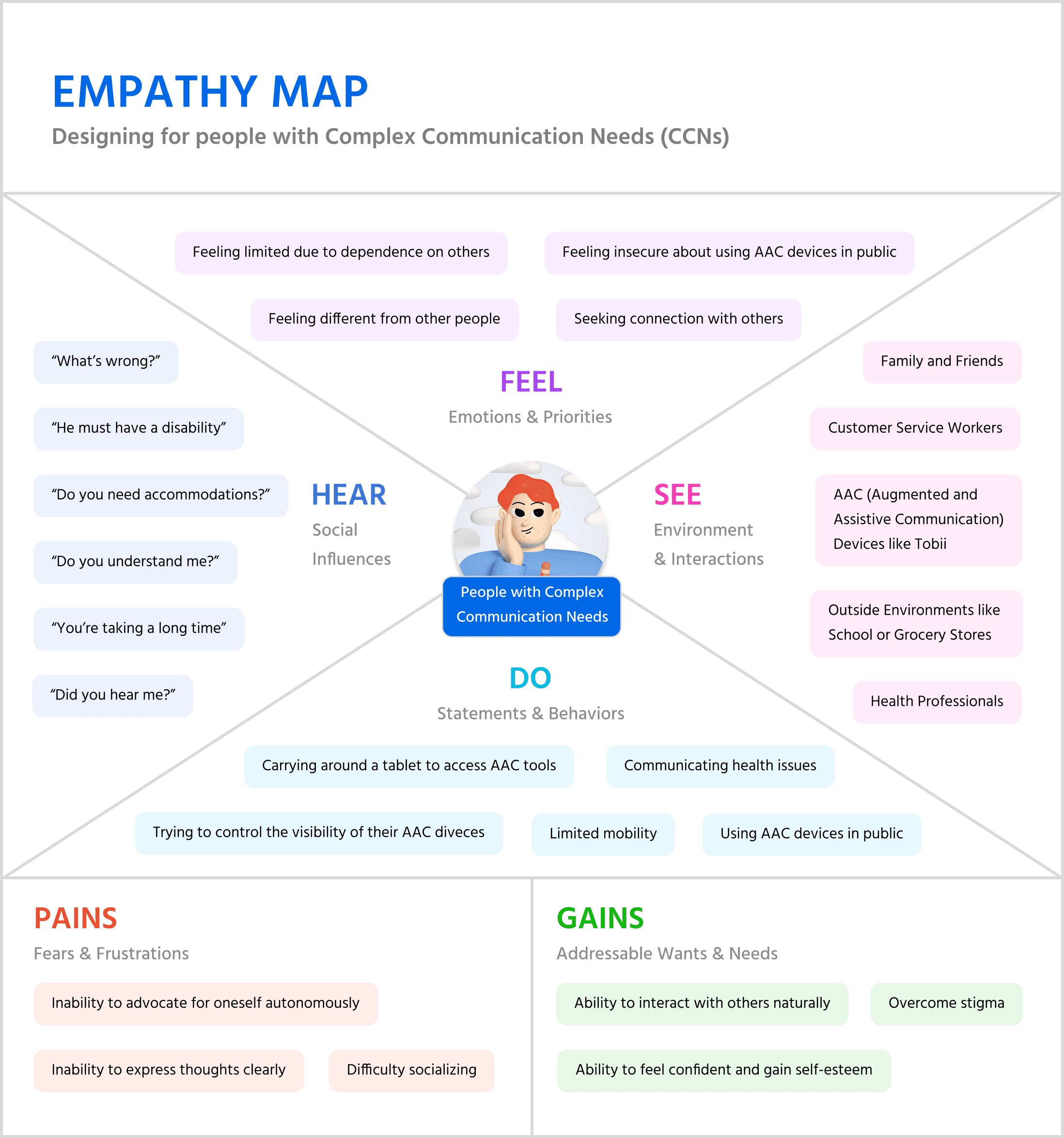
Empathy Map for People with Complex Communication Needs (CCNs)
Jobs-to-be-Done
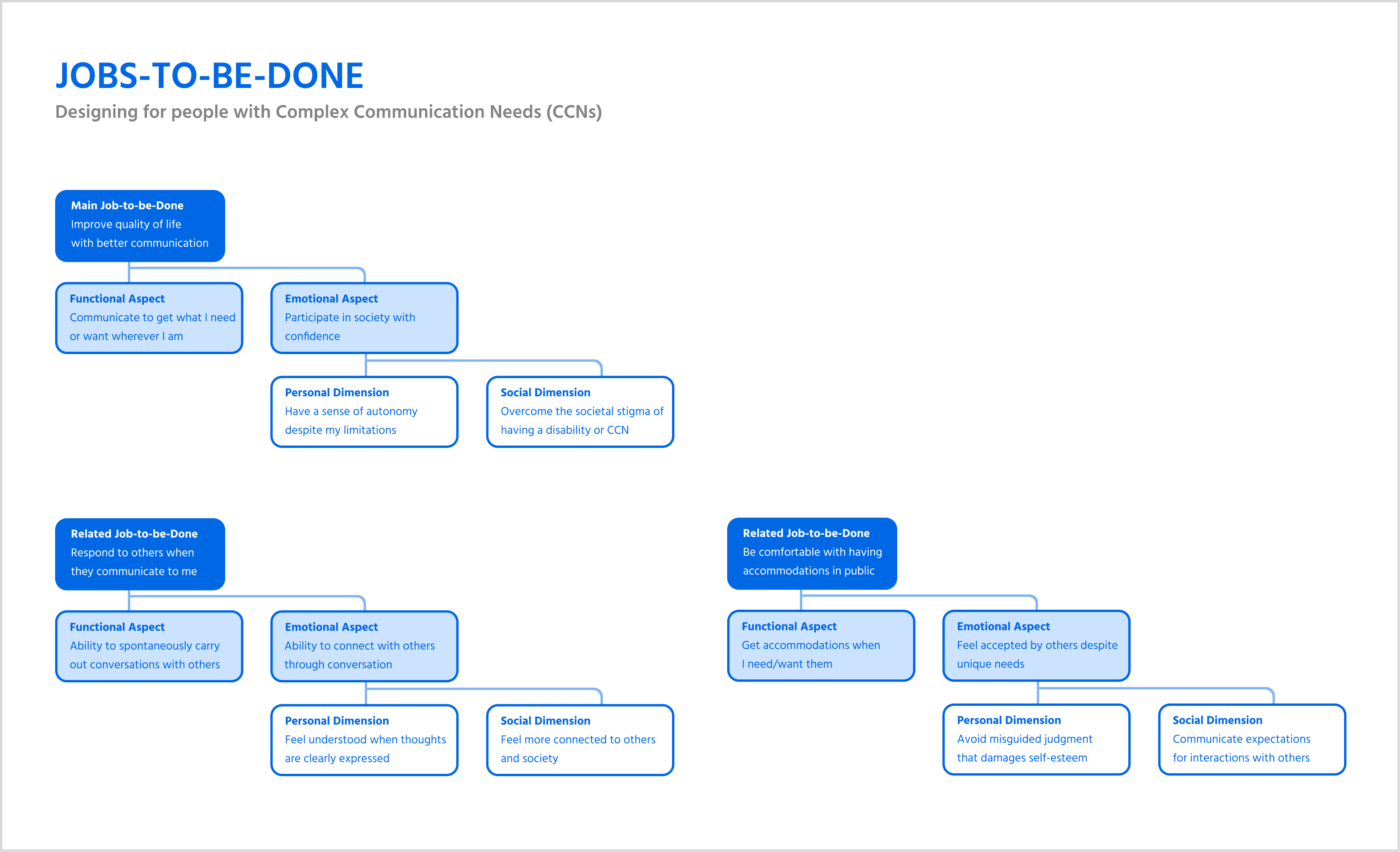
JTBD for People with Complex Communication Needs (CCNs)
Storyboarding
During the ideation phase, I created a storyboard to visualize how a wearable device with AI driven communication would work in a real-life scenario.
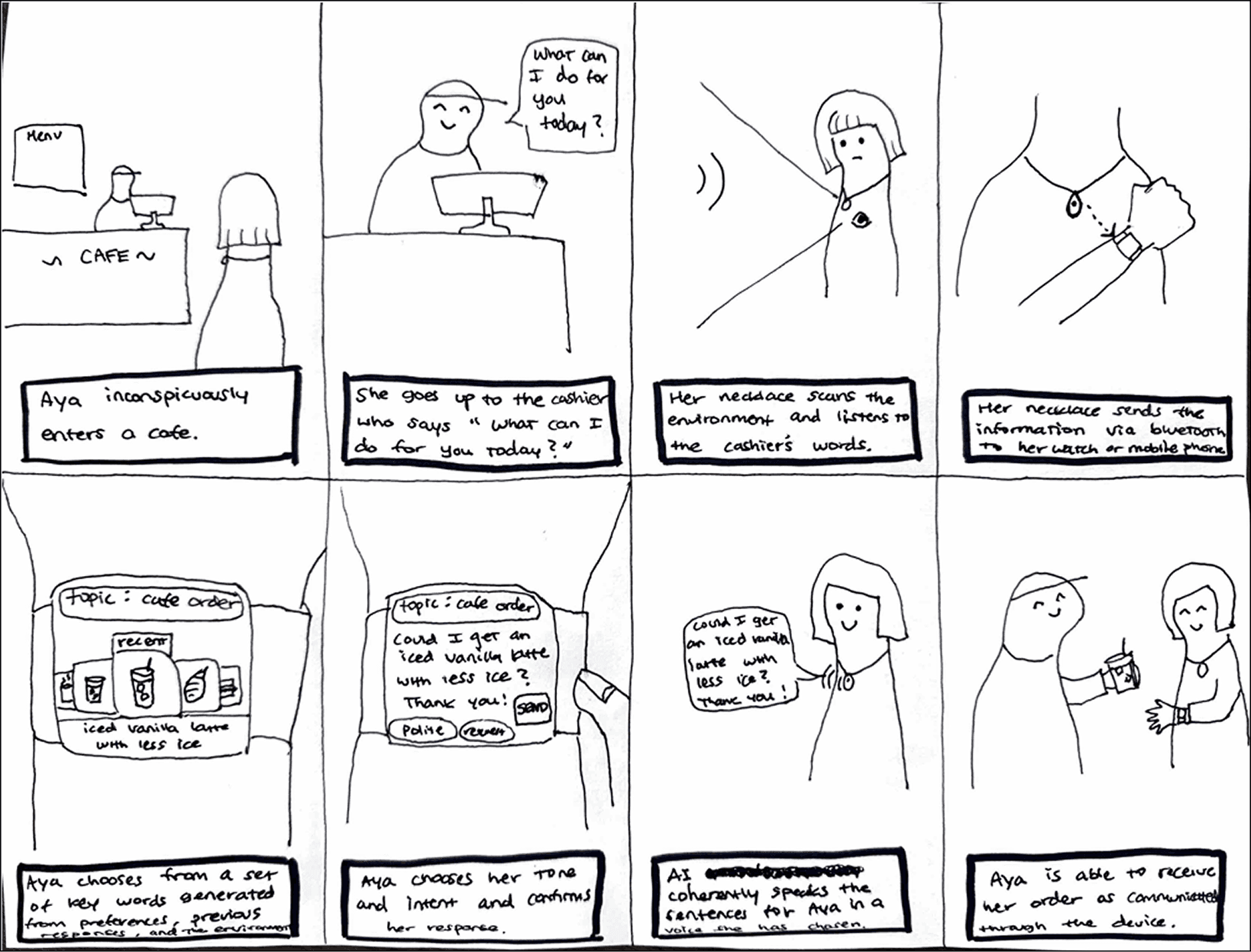
Low Fidelity Storyboard Demonstrating AyaSpeak's Functionality
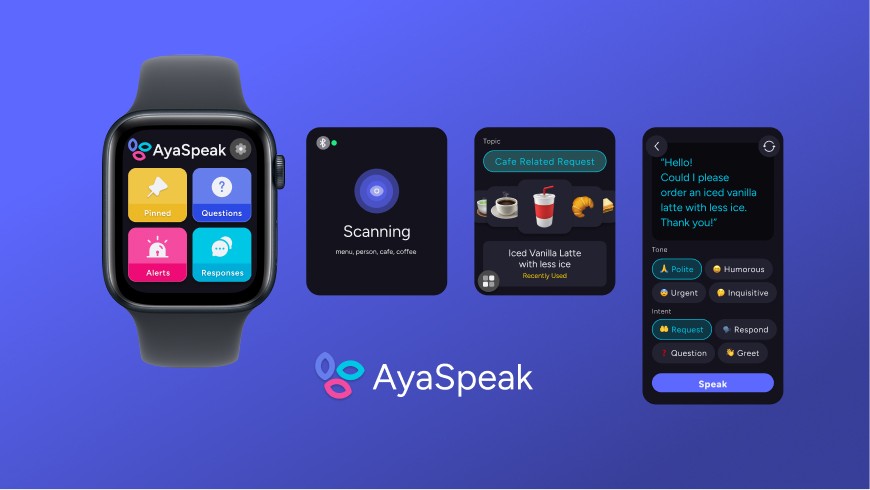
Final Solution